Advertisement | Advertise Here
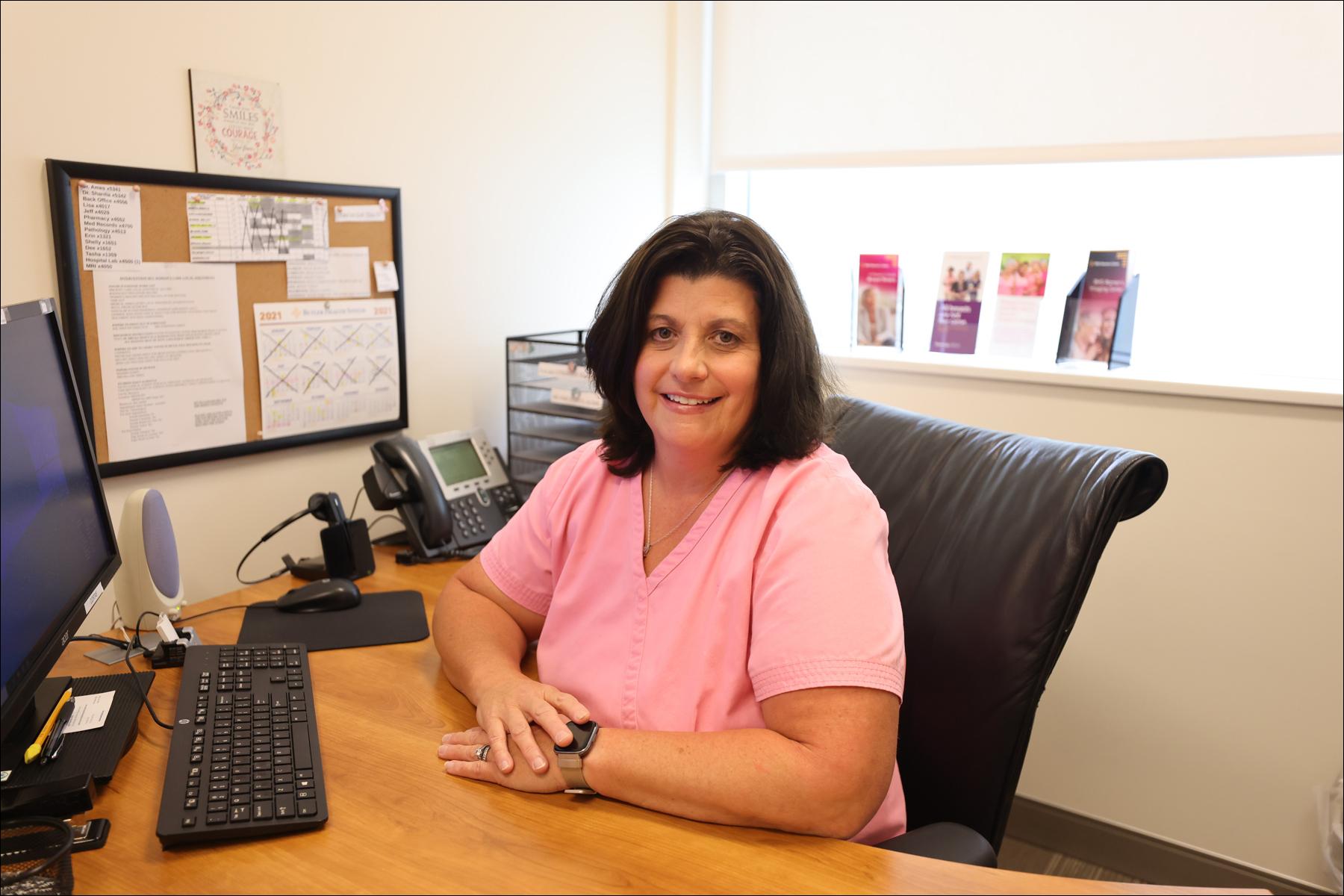
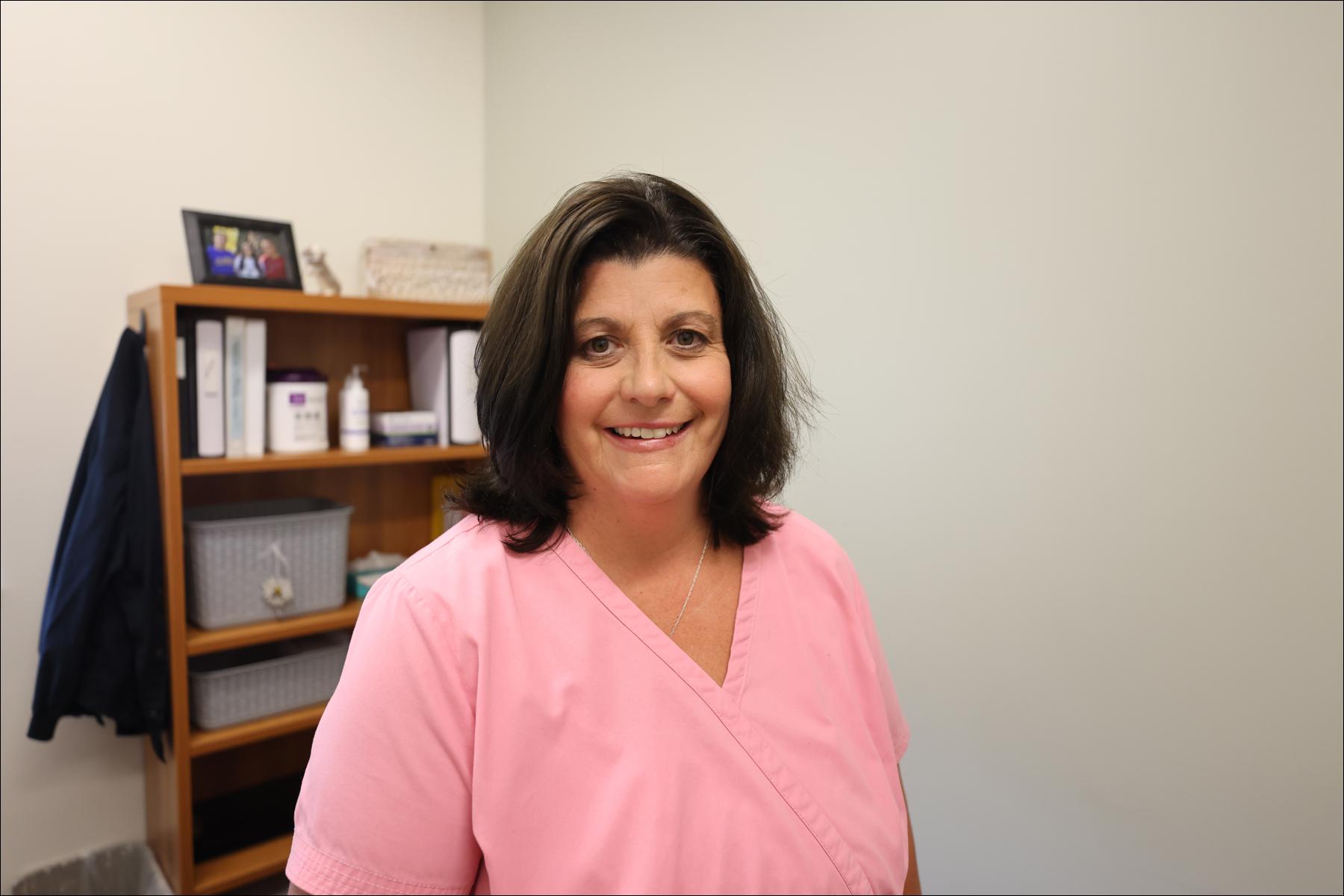
Registered nurse Judy Hansotte guides her patients through mammogram to biopsy to cancer treatment.
It's a route Hansotte, the nurse navigator of the Butler Health System's Women's Imaging Center, has had to travel herself.
A breast cancer survivor, Hansotte was diagnosed with cancer in March 2015 after a mammogram detected a lump in her breast.
A biopsy later confirmed the lump was cancerous.
Hansotte said she was referred to Dr. Tony Maalouf, a surgeon who performed a lumpectomy to remove the cancerous mass.
She was also referred to oncologists Drs. Melissa Cyr and Hung-Chi Ho, who oversaw her subsequent 33 days of radiation treatment.
“I've been cancer-free for six years,” said Hansotte, adding the fact that her surgeon was on the first floor, the women's imaging department on the second and her oncologists on the third floor of the Crossroads building made her treatment and doctor visits that much easier.
She said her experience made her much more empathetic to the women and men with breast cancer who she steers through the stages of diagnosis, treatment and after care.
“What I do is navigate people through their biopsies,” said Hansotte. “I get them ready for their biopsies. Once they get their results, I move them to the steps recommended by their doctors.”
“There's a lot of anxiety with an unknown procedure, and they are afraid to hear that word,” said Hansotte. “Sometimes people are angry. They don't want to be here.”
“I adjust to the people to meet their needs at the time,” she said.
“I do a lot of talking with patients. I'm their cheerleader,” she said, adding she tries to use humor to defuse the anxieties and fears of her patients.
She explained the first step is an annual screening mammogram ordered by a patient's primary care physician or gynecologist usually beginning when a woman reaches age 40.
If something is seen on the mammogram and needs further evaluation, the patient is contacted to come in for a diagnostic mammogram and possible ultrasound, according to Hansotte.
“Then we will recommend a biopsy,” said Hansotte. It may be an ultrasound or stereotastic, a procedure using low-dose X-rays to help locate a breast abnormality, biopsy.
Ultrasound and stereotastic biopsies are done at the Butler Health System's Women's Imaging Center at its Crossroads Campus, 129 Oneida Valley Road.
She said most biopsies are a 20-minute procedure. The extracted tissue is sent to the pathology lab at Butler Memorial Hospital.
“In three to five business days, the physician will call with the results,” said Hansotte, adding that in 80% percent of the biopsies, the anomaly will turn out to be benign.
In the case of benign cysts, nodules or calcifications, there's no definite cause for them, and there is no diet or exercise or habit that can prevent them from forming.
In the other 20% of the cases, Hansotte will help patients through the next step, whether it is surgery, chemotherapy or radiation.
Her time with her patients isn't over when a course of treatment has been decided.
“I follow up with them to see where they are going,” she said. “I follow up on every patient. I may see the patient again, depending on the surgery.”
It can add up to quite a case load because Hansotte sees four to five patients per day four days per week at the imaging center.
“My role throughout all of this is to meet with patients and discuss procedures and plan of care,” she said. “I monitor what meds they take because blood thinners need to be held prior to our procedures. I monitor vital signs and update their histories.
“My most important job is just being there for the patient and guiding them throughout the process,” she said.
She has been a nurse navigator for two and a half years now and hopes to be certified in another two and a half years, a process that will include additional classes and seminars in addition to her work experience.
“I want to make a difference like everybody made a difference for me,” said Hansotte.